I am a footwear designer and owner of Thaqafah handmade shoes. We find new designers style their clothes with our shoes to give style inspiration to those who want ideas on how to style our unique shoes
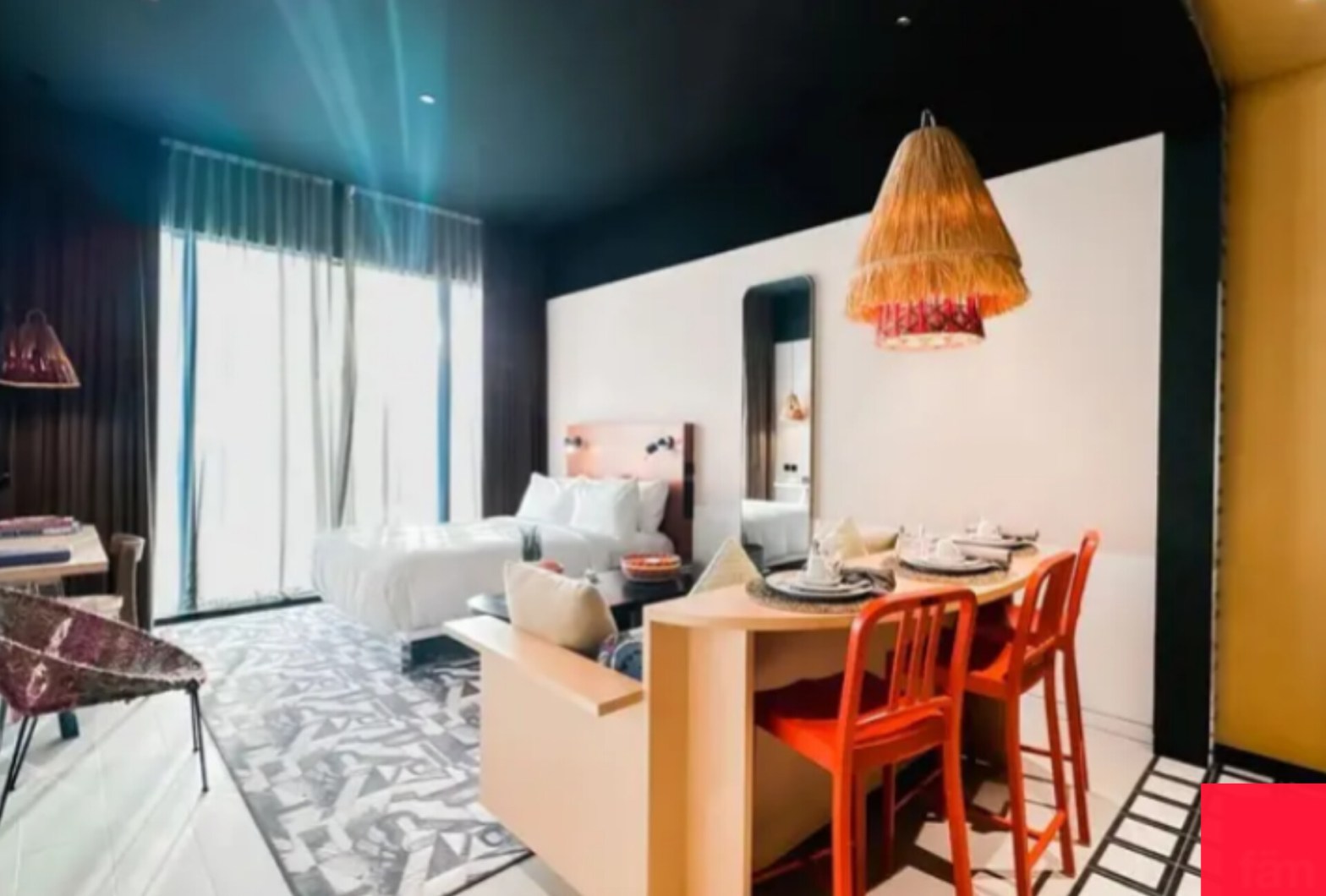
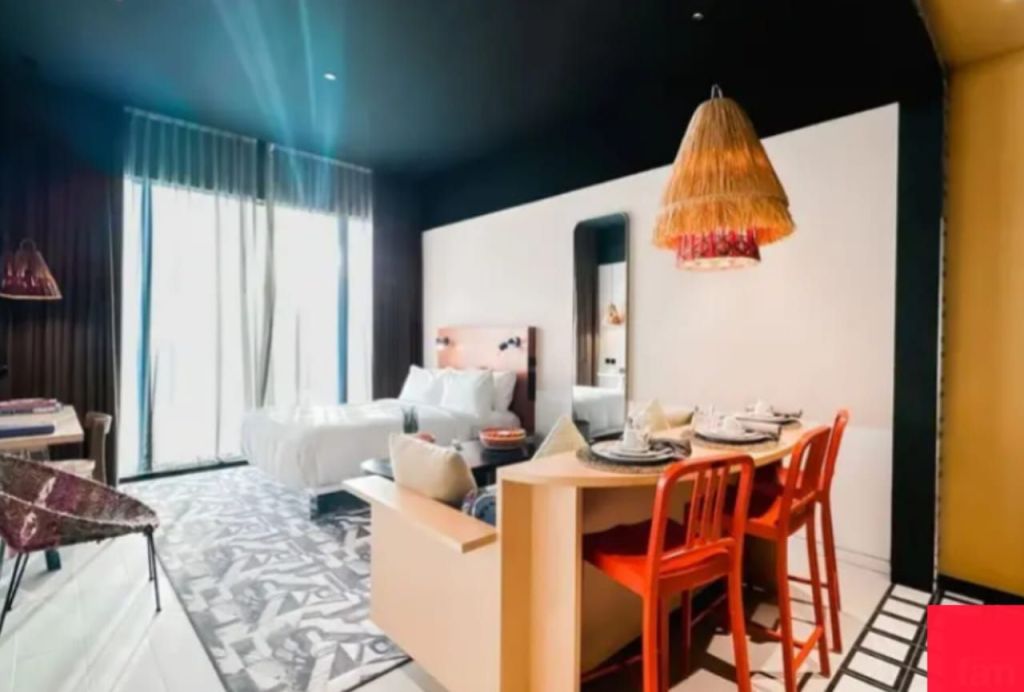
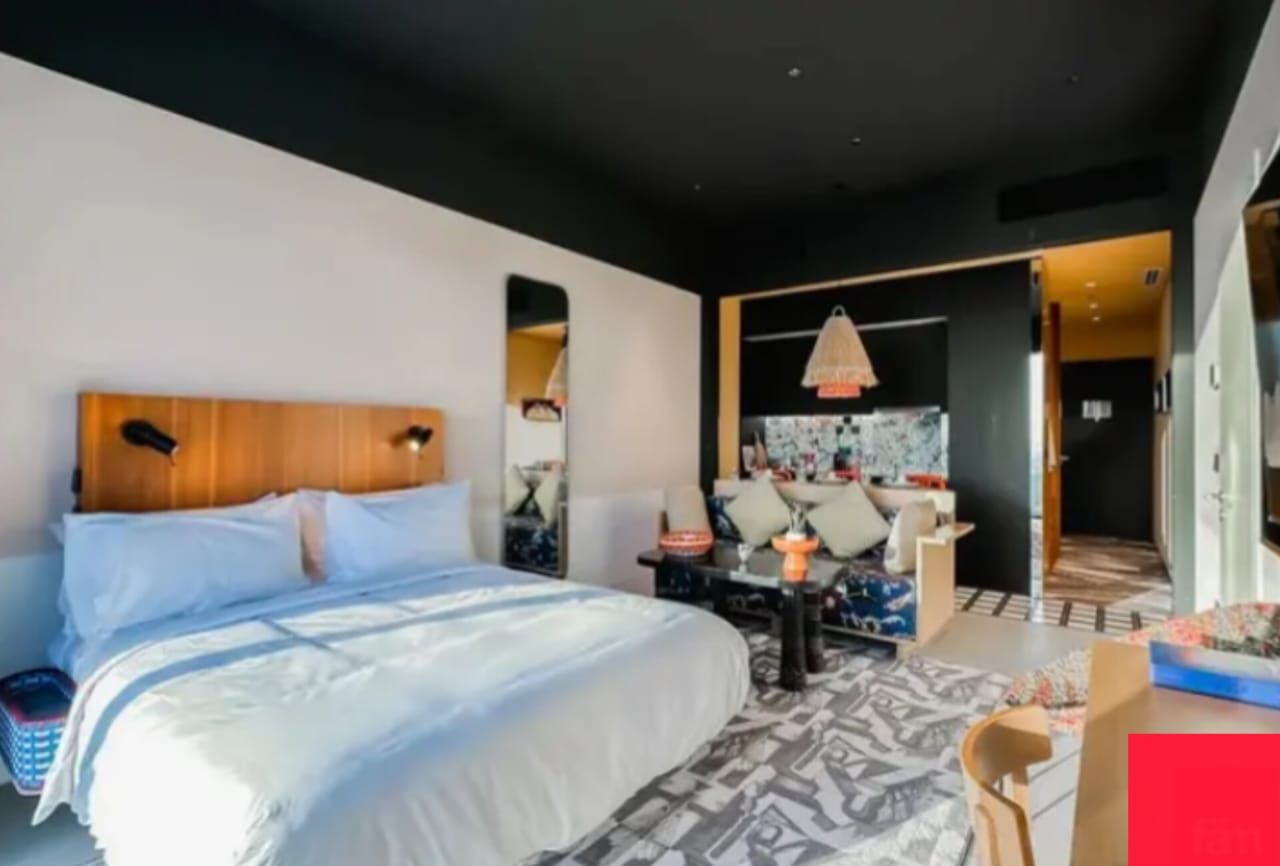
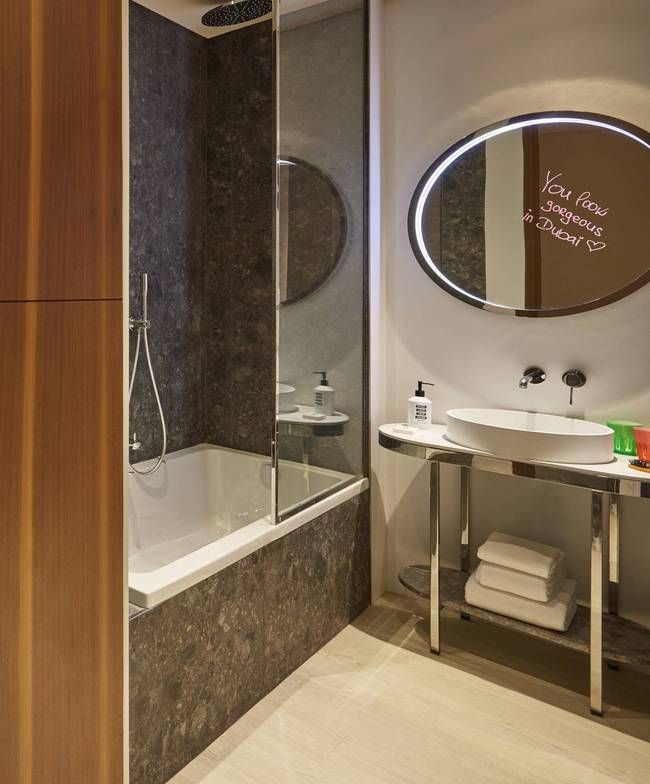
Studio-2 Bedroom units sizes 484 sqft – 907 sqft starting at 1M AED
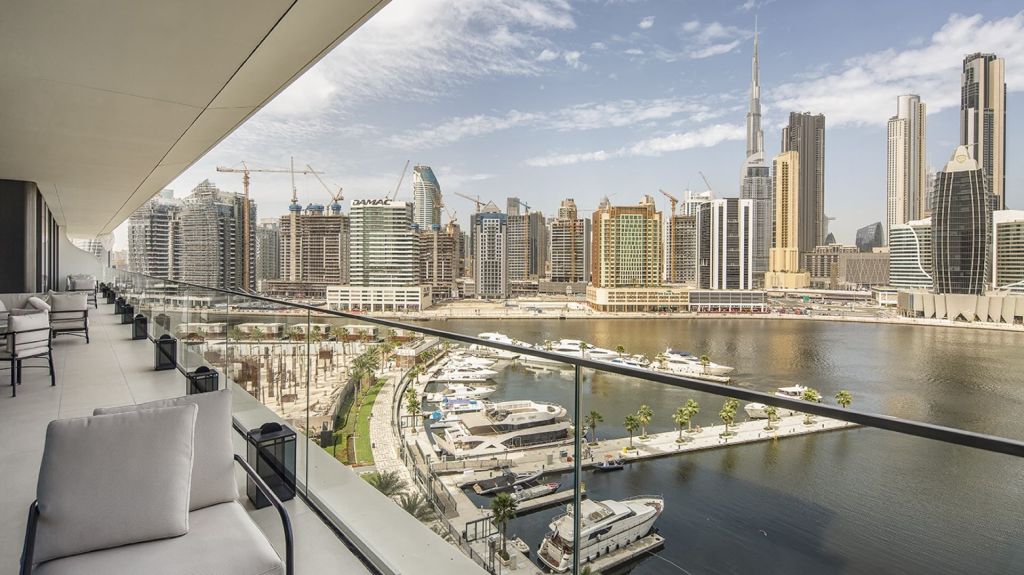
Apartments for sale in Mama Shelter Residences, Business Bay
About:
Mama Shelter is a renowned hospitality brand known for its trendy and vibrant hotels with a focus on design, entertainment, and socializing. Mama Shelter Residences in Business Bay is expected to offer a mix of hotel rooms and serviced apartments, providing guests and residents with a unique lifestyle experience.
Mama Shelter Residences goes beyond what is typically thought of as a home. It is a component of the international Mama brand, which debuted its stylish urban idea in Paris in 2008. Famous for its comfort and modern style, the brand was developed by former Club Med CEO Serge Trigano and renowned French designer Philippe Starck. This dynamic brand is a wonderful fit for Dubai’s quickly changing scene.
Franklin Azzi Architecture, located in Paris, created the architectural masterpiece known as the Mama Residences tower. The design puts a strong emphasis on elegance, lightness, and liveliness, giving the building a vibrant, young feel. The tower has a deep cultural touch because to the artwork that showcases the blending of local and world cultures.
Unit: Studio – 2 Bedroom Size: 458-907 sqft Price: 1.1 M – 3 M AED
Property details: (2 bedroom description)
2 Bedrooms Fully Furnished High Floor Built-in wardrobes Premium Location Post Handover Payment Plan (60% 3 year)
Amenities and Facilities:
•Stylish Restaurants •Bars •Lounges •Co-working spaces •Event venues •Entertainment areas
Completion date December 2024
If you are searching for residential properties to buy either offplan or ready Properties in the UAE, we will give you options to suit your budget.
Be sure to join our investor contact list to be notified about prelaunch and first launch deals to ensure you get first advantage buying.
Contact Us for more information , to book a unit or consultation session on WhatsApp +971 55 134 8912
Sensible pricing’ is starting to show up in key asset values – that’s good for investors
For some direction on where offplan property prices are headed, always maintain close watch on how land prices are shaping and reshaping.
In the US, Morgan Stanley released a report stating that ‘we now believe that price appreciation for the US housing market will be below 0%…’.
The word mincing notwithstanding, it is astonishing as to how quickly commentary changes to catch up to read the writing on the wall when sentiments start to change.
For years, the narrative was about the paucity of supply. Now, it’s about deficient demand.
Nowhere are valuations mentioned. It is a time-honored tradition that most analysts end up honoring – talking around the issue rather than address what is obvious.
In Dubai, even amongst the frenzy of transactions, as offplan prices fall (followed by a decline in land prices too), commentary remains bullish for the most part. Having a different opinion from the blundering herd, however, is not enough in light of data that has been clearly indicating excess supply for the better part of a year now.
Even as generous incentives to lure new buyers are not proving adequate to keep the price momentum going, developers are looking to private (and more expensive) credit to augment cash flows.
But the strain is starting to show as data points now adjust to recording transactions in the newer communities.
Real estate brokers have a vested interest in cheering the market on, but even in their commentary, there is no mention of valuations in community after community.
That of course works well in rising markets, but we know that as land prices fall, the ‘replacement value’ of the asset also starts to adjust. With rents already moving lower in certain communities, lower land prices will directly affect offplan prices, despite the increasing incentives on offer.
More drops ahead for land values?
The question then becomes how far can land prices fall in the next stage of the cycle? A historical analysis reveals that in the 2014-2020 cycle, land prices fell approximately 20%. In the bull market since then, they have risen five-fold, before a recent cooling off. (The narrative around this seems to be that its either seasonal, or its temporary).
But we know that for all the infrastructural and regulatory improvements, such a dramatic price rise has to be followed by some sort of gravitational mean eversion process. That affects the price that developers will offer their product at going forward.
Factor in a weakening dollar
Add to this the increasing possibility of a lower dollar, and some vague reference to ‘supply chain issues’ when the real issue is stagflation, there is no conclusion other than to suggest that prices have to adjust lower in most residential areas as supply comes on stream at an accelerated pace.
This is good for potential buyers, not so much for speculators and people who have already locked in.
Sensible pricing is coming across asset classes throughout the world, which it always does, and the sun has set on the period of excessive returns in the real estate sector. This is good news for affordability.
It is rarely obvious what is going on inside some boom – markets work in free verse and the smartest of people remain at risk of being sucked into the passions of the moment, as is the case with every boom-bust cycle.
But animalistic sentiment has the rhyming feature of turning coldblooded in an instant, and when it does, the adjustment process is never pretty.
Land prices, for all of its variances across the emirate will now – as they always have – dictate the replacement value hypothesis. It will be of no surprise that commentary around this issue will remain scarce, for the analyst community has never missed an opportunity to miss an opportunity.
If you are searching for residential properties to buy either offplan or ready Properties in the UAE, we will give you options to suit your budget.
Be sure to join our investor contact list to be notified about prelaunch and first launch deals to ensure you get first advantage buying.
Contact Us for more information , to book a unit or consultation session on WhatsApp +971 55 134 8912
They can capture great returns and depend on a reliable rule of law
For years, many foreign institutional investors dismissed UAE real estate as speculative and unsustainable, considering it merely a playground for luxury developments catering to the ultra-wealthy, rather than a serious asset class worthy of inclusion in their portfolios. That narrative is no longer true.
Today, the UAE has evolved into a fit-for-purpose, tech-forward powerhouse, and its real estate market is a relatively stable, income-generating opportunity. It is an investment prospect that institutional investors from Europe, the US and Asia – major pension funds and family businesses in particular – can no longer afford to ignore.
About 90 per cent of investors in our own luxury real estate funds, for example, are institutional (typically investing $10 million to $50 million each) and 80 per cent of the total are international. As for the remainder, about 10 per cent are high-net worth individuals (typically investing $1 million to $2 million) and 20 per cent are local family businesses.
It has been great to see interest levels on the rise from European and antipodean sovereign wealth funds, though they have yet to deploy capital. There is also evidence of private equity firms and other structured real estate funds following long-term capital allocation strategies.
Let’s look at the global context. Institutional investors looking for real estate opportunities seek a good risk-return profile. That means markets that are economically and politically stable with reliable governance and processes, and that show good growth prospects.
If you look at the risk-return matrix in the US as an example, it is reasonably easy to identify the risks and appreciate the solid financial structuring that comes around its offerings. To match that, you must be a seriously good asset manager in other parts of the world, where the financial set-up is not the same. For example, instead of a 20-year interest-only loan that prevails in America, we have floating interest rates on loans in the UAE, which makes a huge difference.
Of course, real estate investment opportunities for institutions are not without challenges. There are top-down macroeconomic risks in the form of an increasingly “fractured” global landscape, according to the World Economic Forum’s latest Global Risks report. These include rising geopolitical and economic tensions, climate change, societal polarisation and inequality, which can threaten stability and development.
Bottom-up risks are more complex. For example, it is more difficult to obtain building permissions in older markets, which can result in lengthy project timescales. On the other hand, scarcity of space in these markets can mean higher values because of higher demand. In emerging markets, meanwhile, true “luxury” developments with exceptional build quality are not as prevalent as might be expected.
Another question is that of volatility, which is generally higher in the Middle East and North Africa. Compared with Europe and North America, where much real estate development is replacement-driven, demand for real estate investment in the Gulf region can fluctuate according to economic and geopolitical factors in the rest of the region, Eastern Europe, the subcontinent and Asia-Pacific. Other challenges for investors in the UAE can include rising construction costs due to the shortage of skilled labour and materials like high-quality concrete and finishes, in addition to higher interest rates.
But institutional investors in the UAE real estate market can compensate for both this and financing differences by capturing greater returns on offer while being very disciplined as asset and fund managers. This helps them emulate or exceed the risk-return profile in other parts of the world. Some luxury real estate funds, for example, can realise a fivefold increase in value in the three years from final closing to distribution.
Most important to institutional investors, though, is having a reliable rule of law, as guaranteed by the Dubai International Financial Centre and the Abu Dhabi Global Market, both of which have good track records. Governance is something that comes up in every discussion we have with institutional investors, who react positively when they examine the Dubai Financial Services Authority’s operations and regulatory enforcement. Also, off-plan buyers have more safeguards than before, with a well-regulated land department and their investment capital going through an escrow account.
Another attraction for institutional investors is that there are more exit options available here than before. We are seeing demand for real estate portfolios from local bonds and property development firms, for example.
The shift in institutional investors’ attention to the UAE is supported by current demand. The UAE residential market was on course to reach an impressive value of $390 billion in 2024, with average prices expected to have risen by 19 per cent for apartments and 23 per cent for villas over the previous year. Secondary transaction volumes are up. Values are up. Off-plan sales are also up. Further development is expected in 2025, though the market may not grow quite so spectacularly as contractors work to satisfy last year’s demand.
I see a few underlying trends that sustain this expansion. Firstly, the country’s growing economic and political clout on the world stage. Recent membership of the Brics+ group, which represents about 45 per cent of the world’s population and 35 per cent of global gross domestic product, signals the Emirates’ rising influence in reshaping global economic alliances. This is a strategic hedge and a step towards greater trade, investment and collaboration across fast-growing, emerging markets. It complements the country’s emphasis on knowledge-based economic growth, along with diversifying away from oil and gas, and boosting its technology credentials with home-grown entities.
Secondly, the UAE real estate market has matured into a sophisticated, institutional-grade asset class, characterised by mixed-use developments and logistics hubs with ever-improving product quality. Institutional players looking beyond short-term gains are focusing on stable, sustainable high yield-generating assets. They are sustainable in two ways: environmental credentials appeal to investors who know it is good for re-sale value in the long term. And excellent design and build quality imply the asset will have a long life.
The third factor is that with economic stagnation and rising political risks in the rest of the world, the UAE provides a rare combination of stability and dynamism. In many western markets, inflation, low growth and monetary tightening have eroded returns, while the Emirates maintain a strong and stable economy with moderate taxes. It is an attractive place for wealthy individuals, entrepreneurs and aspiring professionals to live.
The UAE offers long-term value for institutional investors, which is largely unmatched elsewhere in the world today, and a template for more emerging markets to follow in due course.
Mario Volpi, Mario Volpi is head of brokerage at Novvi Properties and has worked in the property sector for 40 years in London and Dubai
Question: I’m thinking of buying a property in Dubai. But a friend is telling me not to as he thinks the market is about to crash. I’m not very well-informed about it. Is it a bad time to buy now? MC, Dubai
Answer: The topic of whether it is a good time to buy now or not seems to be a trending subject as many investors and end users are asking me the same question.
Firstly, it is not possible to time the market as real estate markets rise and fall over periods of time based on the simple economics of supply and demand. Of course, we will have a period of stability because no market can continue to rise year after year. That said, I will share with you my thoughts on the current state of the market and touch on what may happen in the future.
In the past, the Dubai real estate market suffered boom to bust due to instability and factors that would naturally change the course of any rising market. However, it is currently driven by major fundamentals. The government and competent authorities never hesitate to apply cooling measures if they believe the market is overheating.
Right now, the main driver for the market is population expansion, which has contributed to a sustained period of growth, especially after Covid-19. As long as this continues, we will not see any potential downturn until 2026 or 2027 at the very earliest. This prediction is based on the number of handovers of under-construction properties entering the market pool for this year and the years to follow.
However, if the current difficult economic conditions in other places, such as mainland Europe, the UK and possibly the US and Canada, continue, this could further increase Dubai’s current population numbers, in which case we could see the market continue its bull run for years to come.
Nobody can predict what will happen, but other people’s difficulties living abroad and their subsequent decision to move to the UAE, coupled with the Dubai government’s infrastructure improvements and other enhancements to life in general, will certainly keep the population numbers high and possibly even add to them.
Dubai is constantly evolving and looking to innovate and thereby attracts not just the world’s high-net-worth individuals, but ordinary people, too. Therefore, I advise you to grab a slice of the Dubai real estate market if you possibly can, because in the long run, you will be pleased you did.
Q: I’m a newbie making my first property purchase and feeling torn between investing in Dubai or looking at options in India. Property prices in Dubai seem high, capital appreciation rates have been low (0 per cent to 5 per cent since 2014), and I’m cautious about rising costs and my limited budget. Is real estate in Dubai still a good idea?
Based on my research, I think big developers do not always guarantee best quality, off-plan properties can appreciate well but come with risks, especially around delivery timelines and the future of areas like Dubai South remains uncertain.
I am looking for advice on the current real estate market in Dubai versus alternative options. I am also weighing the risks versus potential rewards in Dubai real estate and tips for a first-time buyer navigating this market. SJ, Dubai
A: I am not sure where you get your statistics from, but I can assure you that property prices across Dubai have increased by a considerably higher percentage than your estimation for both villas/townhouses and apartments. That said, it is important to enter any market with a degree of caution and I always advocate to do your homework and due diligence when it comes to any investments.
The reason for buying is also a critical consideration. If it is purely for investment, I would urge you to consider the comments above and, in fact, to dig deeper into factors such as the location, what is nearby, the amenities, who the developer is, build quality, the view, size and costs. However, if you are buying to live in, as long as you can afford the property and it ticks all your boxes, I would not hesitate to proceed.
The Dubai real estate market post Covid has seen some stellar returns and some may argue that it is now running out of steam and we are headed for a downturn. However, the market is now based on proper fundamentals, not speculation, so even if we do have a period of slowdown, it certainly is not a crash.
With the population continuing to grow (160,000 new residents moved to Dubai last year), we can see that the real estate market is in great shape and the supply of inventory is keeping up with demand. In some cases, supply is less than demand, when it comes to town houses and villas.
When it comes to real estate, as long as the buyer holds on to the investment long enough, you cannot go wrong. There are also great mortgage options available and it looks like interest rates may be coming down a bit, too.
However, if you are looking at alternative options like stocks, shares and gold, these are risky because world events can affect their value. Geopolitical events have made Dubai a safe haven and that is why the population continues to grow. Economic uncertainty, especially in Europe, UK and other parts of the world, is making investors or families look to Dubai as a safe place to move to, start a business or to live in a safe and cosmopolitan city.
Zero income tax, year-round sunshine, ease of doing business, golden visas and world-class health care and education centres add to this list. I would not hesitate to invest in Dubai.
Know how much you should be expecting to pay before you move
Tenants looking to move to Business Bay should expect to pay rents between 53k AED minimum for studio apartments up to 1.5 M AED or even more for 3 bedroom apartments, duplexes or penthouses in the area.
This pricing is for unfurnished units, however furnished will be significantly more expensive depending on the building and how many bedrooms that you wish to rent.
If you are searching for residential properties to rent in the Business Bay area, we will do our best to give you options to suit your budget.
Be sure to join our investor contact list to be notified about prelaunch and first launch deals to ensure you get first advantage buying.
Contact Us for more information , to book a unit or consultation session on WhatsApp +971 55 134 8912
Dubai’s strong tourism performance and sustained growth in both visitor numbers and hotel performance indicate the emirate’s resilience and appeal
According to the latest data from the Dubai Department of Economy and Tourism’s 2024 Performance Report, the emirate experienced a 9 per cent increase in international tourist arrivals for the first 11 months of 2024, with a total of 16.79 million visitors between January and November, up from 15.37 million during the same period in 2023.
November saw 1.83 million international tourists, while January and February attracted 1.77 million and 1.9 million tourists, respectively.
Other months showed equally strong performance, with October reaching 1.67 million visitors.
Regional breakdown
Western Europe remained the top source region for international visitors to Dubai, contributing 20 per cent of the total arrivals with 3.3 million tourists. South Asia followed closely, accounting for 17 per cent of the total, with 2.86 million visitors.
The Gulf Cooperation Council (GCC) countries ranked third, contributing over 2.5 million tourists, or 15 per cent of the total, while the Commonwealth of Independent States (CIS) and Eastern Europe saw 2.35 million visitors, accounting for 14 per cent.
Hotel industry performance
Home next UAE next Dubai Dubai attracts 16.79 million tourists between Jan to Nov 2024 Dubai’s strong tourism performance and sustained growth in both visitor numbers and hotel performance indicate the emirate’s resilience and appeal
Gulf Business by Gulf Business January 6, 2025 Follow us
Dubai attracts 16.79 million tourists between Jan to Dec 2024Image: Dubai Media Office According to the latest data from the Dubai Department of Economy and Tourism’s 2024 Performance Report, the emirate experienced a 9 per cent increase in international tourist arrivals for the first 11 months of 2024, with a total of 16.79 million visitors between January and November, up from 15.37 million during the same period in 2023.
November saw 1.83 million international tourists, while January and February attracted 1.77 million and 1.9 million tourists, respectively.
Other months showed equally strong performance, with October reaching 1.67 million visitors.
Regional breakdown Western Europe remained the top source region for international visitors to Dubai, contributing 20 per cent of the total arrivals with 3.3 million tourists. South Asia followed closely, accounting for 17 per cent of the total, with 2.86 million visitors.
The Gulf Cooperation Council (GCC) countries ranked third, contributing over 2.5 million tourists, or 15 per cent of the total, while the Commonwealth of Independent States (CIS) and Eastern Europe saw 2.35 million visitors, accounting for 14 per cent.
Other regions also made notable contributions: the Middle East and North Africa (MENA) accounted for 12 per cent with 1.93 million tourists, while Northeast and Southeast Asia contributed 10 per cent with 1.62 million.
Visitors from the Americas, Africa, and Australia made up 7 per cent, 5 per cent, and 2 per cent of total visitors, respectively, with figures of 1.12 million, 791,000, and 319,000.
Hotel industry performance Dubai’s hotel sector has mirrored the tourism growth, with the total number of hotel rooms reaching 153,390 by the end of November, an increase from 149,685 at the end of 2023.
The growth of hospitality establishments was also reflected in a 3 per cent rise in hotel room bookings, which exceeded 39.19 million during the first 11 months of 2024, compared to 38.01 million in the same period the previous year.
The average length of stay for guests was recorded at 3.6 nights, suggesting continued demand for both short-term and extended stays.
The breakdown of hotel room categories shows a clear dominance of higher-end properties. Five-star hotels accounted for 35 per cent of the total rooms, with 53,977 rooms in 168 establishments.
Also, Dubai’s luxury hotel apartments comprised 13,944 rooms in 80 establishments, while mid-level hotel apartments numbered 12,423 across 108 properties.
Dubai’s hotel sector has also benefited from rising rates. The average daily rate (ADR) for the first 11 months of 2024 was Dhs520, a 2 per cent increase from Dhs510 in the previous year.
The average revenue per available room (RevPAR) showed a 3 per cent rise, reaching Dhs405 compared to Dhs394 in 2023.
If you are searching for residential properties to buy either offplan or ready Properties in the UAE, we will give you options to suit your budget.
Be sure to join our investor contact list to be notified about prelaunch and first launch deals to ensure you get first advantage buying.
Contact Us for more information , to book a unit or consultation session on WhatsApp +971 55 134 8912
The conversion of qualified non-freehold properties will drive demand across various submarkets
According to an industry estimate, the UAE’s real estate performance in 2025 would be driven by limited available supply, infrastructure development, and alternative assets such as last-mile logistics and data centres.
The ability to convert qualified non-freehold properties will drive demand across submarkets, while new infrastructure projects and alternative assets are expected to drive real estate development in the UAE this year, according to a report by JLL, a leading global commercial real estate and investment management firm.
UAE real estate performance
“Although the MEA region’s construction project market slowed in 2024, the UAE dominated construction project awards during the year, securing the largest share with 47 per cent, amounting to $34 billion,” according to JLL’s Middle East and Africa Market Review and Outlook 2025.
In terms of sectors, the UAE outperformed in residential and mixed-use projects, awarding $28.3 billion and $4.6 billion, respectively.
Taimur Khan, Head of Research MEA at JLL, stated that with inflation rates stabilizing and a strong labor market, the real estate sector is experiencing strong demand across key industries in both Dubai and Abu Dhabi.
“GDP growth has been amongst the strongest in the UAE as compared to other GCC countries, which is a testament to the government’s continued strategic efforts to attract investment,” he said.
Gary Tracey, Head of Project & Development Services UAE at JLL, stated that despite growing construction prices, the UAE’s real estate market is likely to maintain its upward trend in 2025, as indicated by healthy order books and good performance in the residential and mixed-use project sectors.
“This demonstrates the market’s resilience and underlying strength, but also underscores the need for diligent cost control and innovative solutions to ensure sustainable growth,” Tracey said.
Robust demand in Dubai
According to the research, Dubai’s residential sector finished 2024 on a high note, with sales transactions up 32% from the previous year, totaling AED367 billion.
Investor demand for off-plan properties remained high, accounting for the majority of deals valued at nearly AED223 billion, or 60.7% of the total.
Behind the strong demand, the developer launched around 157,000 units in 2024. Most of them cited Reizin’s data over the year, according to the report.
JLL, meanwhile, said the rental market has seen a decline in annual growth rates of 15.7%, indicating that shorter drugs could stabilize rents.
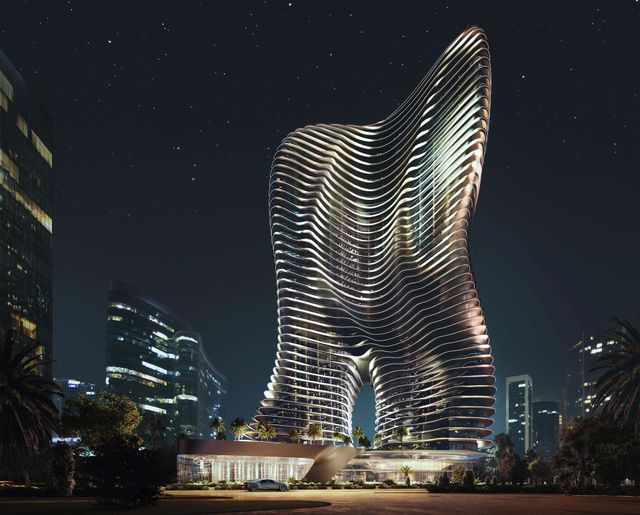
Bugatti Residences, Binghatti Jacob & Co, Binghatti Mercedes Benz
We’ve all heard all the rave about the most luxurious branded collaboration real estate projects coming out of Dubai that has blown us away one after the other. That being said we can’t say enough about the Real Estate tycoon Binghatti who has impressed us with some of the best luxury projects on the market to date.
Let’s start with Bugatti Residences
Known for their unwavering and uncompromising commitment towards excellence, Bugatti and Binghatti – two visionary brands – have unveiled their first collaboration: a ground-breaking real estate development in the heart of Dubai. The project was revealed at the Coca-Cola Arena in Dubai on May 24th, 2023 by Mate Rimac, CEO of Bugatti Rimac, and Muhammad BinGhatti, CEO of Binghatti.
Bugatti Residences by Binghatti – the first-ever Bugatti Residences in the world – is located in the prime area of the Business Bay in Dubai. The collaboration between the two revered brands aims to depict synergies that achieve unparalleled excellence. Drawing upon the rich and diverse creative heritage of both brands, the Bugatti and Binghatti collaboration project has at its nucleus a meticulously designed structure featuring a distinctive façade complemented by intricately designed interiors. With its serene undertones, the hyper-form will juxtapose the city’s bustling energy – a retreat in the heart of the metropolis.
The design of Bugatti Residences reflects the iconic brand elements and luxury design innovations of Bugatti, merging these values cohesively with Binghatti’s expertise in creating a phenomenal architectural masterpiece. Bugatti Residences will feature a collection of 171 Riviera Mansions and 11 Sky Mansion Penthouses, each of them being absolutely unique with bespoke curated layouts. The first Bugatti residence is also designed with peerless luxurious amenities, including a Riviera-inspired beach, private pool, jacuzzi spa, fitness club, chef’s table, private valet, private members club and two garage-to-penthouse car lifts. The residence also features a host of high-end and tailored services dedicated to its residents, including bespoke chauffeur and concierge services.
The two brands have integrated the distinctive flair of the French Riviera into every aspect of the development. Starting from the very moment of setting foot within the residences, a sense of exuberance takes hold, transporting residents to the inspiring region that has long captured the hearts of connoisseurs of refined living. In the same way that Bugatti has translated the beauty and sophistication of French luxury into the design of its hyper sports cars, Bugatti Residences brings the breeze and feel of the French Riviera into this private oasis. In its organically sculpted design, Bugatti Residences by Binghatti manifests the beauty of the Riviera’s spirit and flair.
Next up Binghatti Mercedes Benz
“People choose and love cars for different reasons and choose different brands for different reasons. Ultimately, its the narrative these brands tell; each brand has a specific heritage and has a different narrative to tell,” Muhammad BinGhatti, CEO, Binghatti Properties,
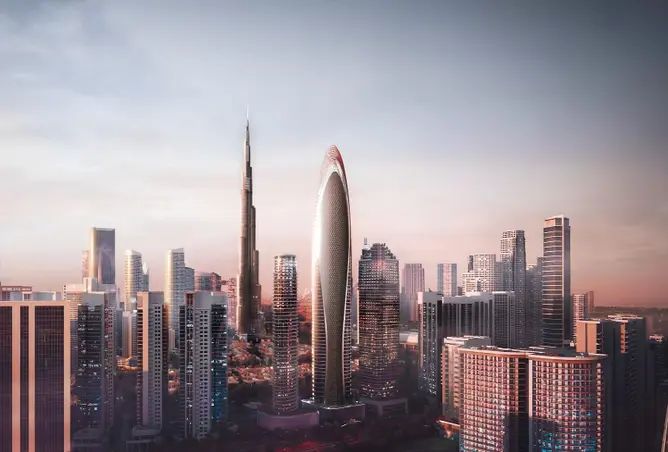
According to BinGhatti, designers from Mercedes-Benz have collaborated to transfer the brand’s design DNA, emotion, intelligence, and emphasis on innovative technology to branded residential living spaces at a project in Dubai.
The project — first announced in December 2023— broke ground mid 2024 , and will take the form of a 65-storey residential tower that centred around a holistic, connected, and desirable luxury living experience.
Top features of the building include an elliptical shaped tower that allows all units to have panoramic views of the Dubai skyline, a photovoltaic panel façade on one side that will generate power for electric vehicle chargers in the parking area, as well as luxurious amenities for residents, including private, in-unit facilities. Units — of up to five bedrooms — are named after classic and timeless car models from the manufacturer.
Rising to 341 metres (1,118 feet), the tower is located in Downtown Dubai with uninterrupted views of Burj Khalifa.
Last but most definitely not least is the exclusive Binghatti Jacob & Co diamond incrusted tower
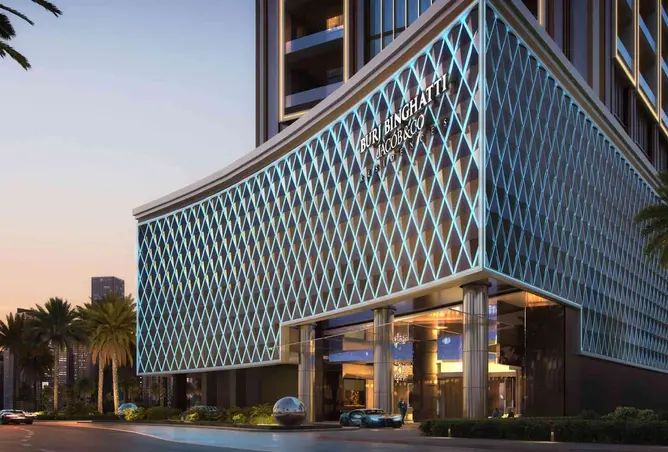
Binghatti has joined hands with globally renowned high jewellery and watchmaking brand Jacob & Co. to celebrate a major sales milestone achieved at its premium development – The Burj Binghatti Jacob & Co. Residences – with nearly 50% of the project sold out, within just nine months of sales launch.
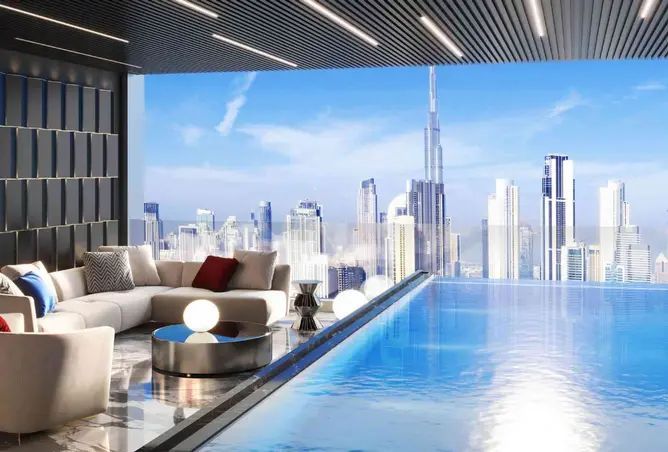
As construction progresses rapidly, anticipation in the market is building up for the inauguration of this architectural marvel. With its sleek design, unparalleled lifestyle offerings and panoramic views of the cityscape, the hyper-tower promises to offer unmatched living experience that epitomizes urban luxury, it stated.
The 104-storey Dubai building, on completion, is set to become the world’s highest residential tower, stated the developer.
The accomplishment of this cutting-edge development further reinforces Dubai’s standing as the premier destination for investors and homeowners seeking to dive into ultra-luxury real estate, and Jacob & Co.’s unique commitment to the emirate.
Terming it as a massive architectural and commercial success, Binghatti said this is a rare achievement in the realm of hyper luxury real estate.
It not only highlights the relevance of the partnership between Binghatti and Jacob & Co. but also persistent demand for premium real estate offerings in Dubai, thus establishing a new standard for the sector.
The crown jewel in Dubai’s skyline, The Burj Binghatti Jacob & Co. Residences keeps experiencing enormous success, he added.
Arabo pointed out that the motto and design ethos of Jacob & Co. is “Inspired by the Impossible”. This state of mind also serves as the driving force behind the development of Burj Binghatti Jacob&Co. Residences.
Binghatti Bugatti Residences
Starting : 19 M Property Type: Apartment/Sky Mansion Unit type: 2-5 beds Size: 2,000 sqft – 47,000 sqft Down Payment: 25% Payment Plan: 70/30 Handover: Q2 2026 Location: Business Bay
Binghatti Mercedes Benz
Starting : 11.5 M Property Type: Apartment Unit type: 2-5 beds Size: 1,586 sqft – 6,969 sqft Down Payment: 20% Payment Plan: 70/30 Handover: Q4 2026 Location: Downtown Dubai
Burj Binghatti Jacob &Co
Starting : 9.4 M Property Type: Apartment/Penthouse Unit type: 2-7 beds Size: 2000 sqft – 22,000 sqft Down Payment: 35% Payment Plan: 70/30 Handover: Q2 2026 Location: Business Bay
If you are searching for residential properties to buy either offplan or ready Properties in the UAE, we will give you options to suit your budget.
Be sure to join our investor contact list to be notified about prelaunch and first launch deals to ensure you get first advantage buying.
Contact Us for more information , to book a unit or consultation session on WhatsApp +971 55 134 8912
Real estate tokenisation transforms real estate assets into digital tokens using blockchain technology
Dubai Land Department (DLD) on Wednesday said it launched the pilot phase of the ‘Real Estate Tokenisation Project’ to implement tokenisation on property title deeds to open new investment opportunities for investors.
DLD said it seeks to diversify property ownership by allowing multiple investors to co-own a single property through tokenised real estate assets.
Real estate tokenisation transforms real estate assets into digital tokens using blockchain technology. Each asset is divided into shares based on an investor’s budget and financial strategy, enabling fractional property ownership.
This approach marks a significant shift by allowing investors to acquire a portion of a property without fully purchasing it, leveraging advanced technology. Unlike crowdfunding, which grants investors access to the real estate market with small investments through digital platforms, tokenisation offers a distinct and more structured model for real estate investment.
Greater liquidity
Farooq Syed, CEO of Springfield Properties, said this would revolutionise the Dubai property market by introducing greater liquidity, accessibility, and efficiency.
Farooq Syed
“By converting property assets into digital tokens on a blockchain, investors can buy and sell fractional ownership in real estate, significantly lowering the capital required to participate in the market. This will also enable a more seamless and transparent transaction process, reducing paperwork and intermediaries,” he said.
“Additionally, blockchain technology ensures secure, immutable records, enhancing trust and reducing fraud risks in property transactions.”
He added that tokenisation will increase the buyer base of Dubai and democratise access to Dubai’s real estate market. “Smaller investors will now be able to buy properties and we will see a more diversified buyer base and bringing more stability. More participants will mean more liquidity, faster transactions and possibly higher volumes of transactions which will further boost the development of Dubai’s real estate market,”
Wissam Breidy, CEO of HRE Development, said tokenisation allows smaller investors to participate in high-value real estate projects. This “inclusivity will diversify the investor base and create a more dynamic market.”
Wissam Breidy
Yogesh Bulchandani, CEO of Sunrise Capital, said tokenisation lowers barriers to entry, making real estate accessible to a wider pool.
Rohit Bachani, co-founder of Merlin Real Estate, added that this democratises the market, allowing more investors to get involved in Dubai’s premium properties without the need for significant upfront capital.
“Investors can now diversify their portfolios with ease and benefit from enhanced liquidity through tokenised transactions. It’s an innovative way to bridge the gap between traditional real estate investment and the evolving tech-driven market, aligning with our mission to bring the finest luxury real estate experiences to lifestyle enthusiasts,” he said.
Bachani elaborated that tokenisation allows smaller investors to invest in high-value properties in Dubai, from branded residences to luxury waterfront living and cityscape views. “This opens up the market to a wider range of investors, ultimately enriching the ecosystem with more depth and diversity while enhancing the investment opportunities across various segments.”
Dh60-billion market
The project will strengthen Dubai’s position as a regional and global hub for virtual assets, enhancing its competitiveness on both local and international levels.
DLD anticipated that this groundbreaking initiative would drive significant growth in the real estate tokenisation sector, with its market value projected to reach Dh60 billion by 2033, representing seven per cent of Dubai’s total real estate transactions.
“By converting real estate assets into digital tokens recorded on blockchain technology, tokenisation simplifies and enhances buying, selling, and investment processes,” said Marwan Ahmed Bin Ghalita, Director General of Dubai Land Department.
“Following this year’s pilot launch, we will thoroughly assess the outcomes and leverage key insights to refine the project ahead of its full-scale implementation.”
Marwan Ahmed Bin Ghalita
He added that this project is part of the recently launched ‘REES’ Real Estate Innovation Initiative to attract diverse technology firms.
The project is being implemented in collaboration with the Dubai Virtual Assets Regulatory Authority (VARA) and Dubai Future Foundation (DFF) through SandBox Real Estate.

















 Philly2dubairealtor