I am a footwear designer and owner of Thaqafah handmade shoes. We find new designers style their clothes with our shoes to give style inspiration to those who want ideas on how to style our unique shoes
New Dubai IPO creates win-win formula for investors
The Dubai property boom continues. As one of the biggest names within it, Dubai Holding backed IPO offers investors another route to plug into the growth.
Dubai: As the first Dubai IPO of 2025 gets rolling, more investors – and especially non-UAE ones – are ready to sign up to trade on the Dubai Financial Market (DFM).
Dubai Holding is putting up its substantial residential portfolio through the REIT (real estate investment trust) IPO, it is a chance for newer investors – and for existing investors to keep cashing in. Because the Dubai Residential REIT IPO offers the best of both worlds:
* Access to another of Dubai’s bluest of blue-chip entities; and
* Another chance for investors to ride the Dubai property market wave. (Even one that’s showing signs of growth rates stabilizing at elevated levels.)
“Investors are getting a win-win with the latest pure-play real estate IPO,” said an analyst. “In much the same way the previous such one – from Tecom Group – did.”
According to Samer Deghaili, Co-head of Investment Banking for MENAT markets at HSBC, “IPOs have been enjoying strong, often record-breaking demand bringing in local, regional and international investors.
“Structural developments, such as the introduction of stabilisation mechanisms and an increasing awareness from issuers of the dynamics between IPO valuations and aftermarket performance are key to continued success.”
DFM keeps pulling in more
Going by the sign ups during the first three months of 2025, a lot of them have already done so. In Q1-2025, there were 19,366 new investors, of whom a staggering 86% were foreign nationals.
“Over the past three years, Dubai has witnessed an influx of foreign investors from across the investment spectrum opening offices in the emirate,” says a new report issued by HSBC on Dubai’s capital markets growth.
Foreign investors, in fact, accounted for half of all trading on the DFM at the end of 2024.
“The number of total market investors registered on DFM has now surpassed 1.2 million,” says the HSBC report.
“Some 138,262 investors registered with the exchange in 2024 and more remarkably, 85% of these were foreign, demonstrating the appetite and focus Dubai has from the global investor community. This followed an inflow of 62,676 the previous year when 73% of registrants were foreign.
“In 2022, the equivalent number was 167,332.”
To keep investors coming in for more, this is where offerings such as the Dubai Residential REIT’s come in handy. Because as has been clear from the listings made since April 2022, starting with DEWA, Dubai Government backed privatization moves have clicked big-time with investors.
“We believe the combination of a healthy IPO pipeline with growth in secondary market offerings will help to continue enhancing DFM’s liquidity,” said Nabeel AlBloushi, Head of Markets and Securities Services for the MENAT markets at HSBC.
“A strong share price performance in the months and years post-IPO opens the door for selling shareholders to monetise additional shares, boosting liquidity and free float.”
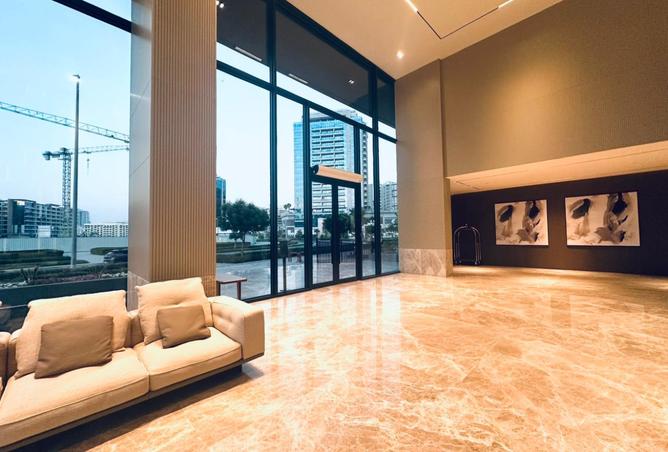
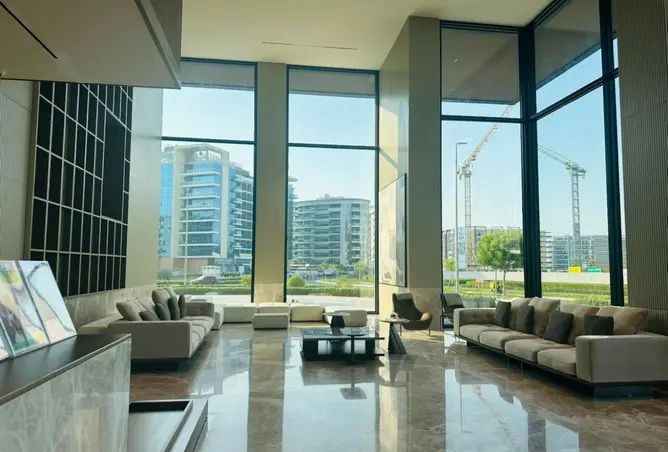
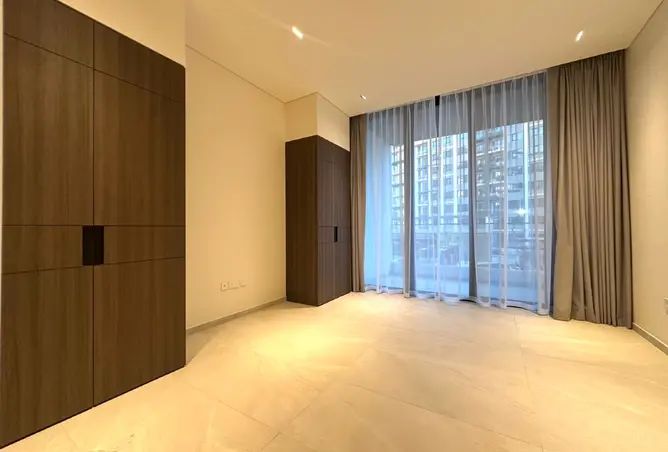
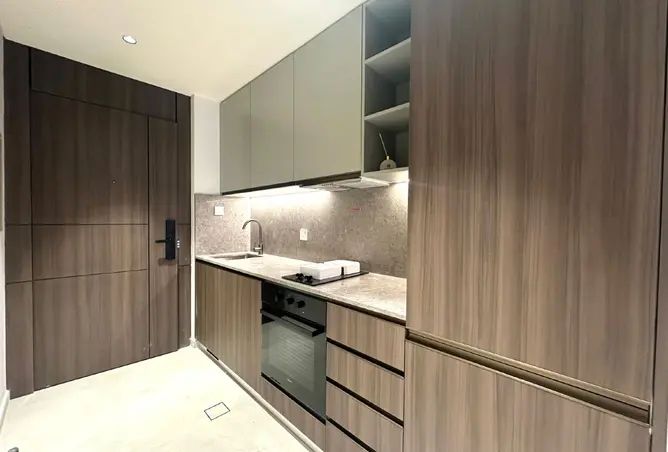
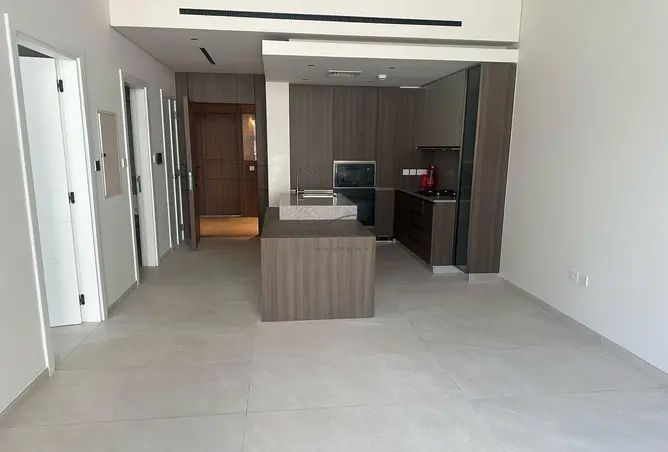
Premium Studios in Beverly Boulevard, Arjan, Dubai, UAE
PROPERTY FEATURES and AMENITIES:
Studio description –
398 square ft. Luxury Studio 1 Bathroom Elegant style balcony Infinity swimming pool and sun deck for relaxation. A state-of-the-art gym and fitness center. Dedicated spaces for yoga and other wellness activities. BBQ areas and outdoor lounges for socializing and leisure. Kids’ play areas and lush green spaces for families. 24/7 security and smart home systems for enhanced safety and convenience.
Accessibility: Around 10-15 minutes drive to Dubai Hills Estate and Mall of the Emirates. A short distance to key business hubs like Dubai Internet City and Dubai Media City. 20-25 minutes drive to Downtown Dubai and Dubai International Airport.
Completion date September 2024
If you are searching for residential properties to buy either offplan or ready Properties in the UAE, we will give you options to suit your budget.
Be sure to join our investor contact list to be notified about prelaunch and first launch deals to ensure you get first advantage buying.
Contact Us for more information , to book a unit or consultation session on WhatsApp +971 55 134 8912
Around 1,000 residents a day were added to Dubai population in Q1 2025 and they need somewhere to live…
2025 Villa rents rise by 5.1% and apartment rents surge by 10% annually, ValuStrat report finds
Dubai’s rising population is sending up demand for real estate in the city, according to ValuStrat analysis.
Housing demand in Dubai has reached unprecedented levels as a growing population continues to drive absorption of supply in the residential market, according to real estate consultancy ValuStrat.
By the end of March, Dubai’s population had risen to 3.92 million, with 89,695 new residents added in just the first three months of the year, an average of approximately 1,000 people per day. The net population increase for 2024 was 170,478 people, averaging less than 500 per day, ValuStrat said in a new report.
“Securing an affordable home to buy or rent is becoming more difficult in an increasingly unaffordable market,” said Haider Tuaima, managing director and head of real estate research at ValuStrat.
“There has been consistent annual growth in capital values across all segments, according to the ValuStrat Price Index, which tracks the residential market. Apartment prices have risen by 21.4 per cent, while villa prices have increased by 30.3 per cent. Rents have also surged, with villa rents up by 5.1 per cent and apartment rents rising by 10 per cent.”
The number of people seeking to buy or rent outstrips the volume of available properties. An earlier report issued by ValuStrat said that 27,000 new homes were completed in 2024, which the consultancy said was the lowest figure for six years. Meanwhile, the emirate’s population continued to grow, meaning demand was significantly outstripping supply.
Dubai’s property market has been benefiting from government initiatives, such as residency permits for retired and remote workers, expansion of the 10-year golden visa programme and overall growth in the UAE’s economy on diversification efforts.
Around 61,580 new homes are estimated to be delivered in Dubai this year, 70 per cent being apartments, and 30 per cent villas/town houses. Of these, 19 per cent, nearly 12,000 apartments and villas, were completed in the first quarter alone, ValuStrat found.
“This is not unexpected, considering that just over half of last year’s projected deliveries were ultimately handed over,” Mr Tuaima said.
ValuStrat estimated that 141,404 apartments and 29,649 villas and town houses are actively under construction, with handovers promised by 2029. Of these projects, 12 per cent is located in Jumeirah Village Circle, with another 7 per cent located in Business Bay followed by Jumeirah Lakes Towers with 5 per cent, the consultancy found.
Off-plan Oqood (contract) registrations declined by 8 per cent in the first quarter compared to the previous three months, but were 37.5 per cent higher annually, representing investments totalling Dh77.3 billion. The first quarter recorded 12,396 secondary ready home transactions, up 5.8 per cent year-on-year but down 7 per cent quarter-on-quarter, equivalent to investments worth Dh33billion, the data showed.
“ There has been consistent annual growth in capital values across all segments
The Dubai real estate market registered 9,388 mortgage transactions across all asset classes in the first three months of 2025, compared to 14,386 cash transactions of ready properties. The total sales value attributed to mortgage transactions stood at Dh21 billion, with cash transactions totalling Dh33 billion.
“The only downside this quarter was the decline in residential sales, both off-plan and ready properties, as well as a decrease in mortgage applications, though this is only when compared to the previous quarter. This trend is neither unprecedented nor unexpected and may be attributed to a mismatch between supply and demand, potentially leading to a market correction at some point,” according to Mr Tuaima.
On average, most apartment communities remain 8.1 per cent below their capital values from a decade ago. Notable exceptions include Palm Jumeirah, The Greens and Jumeirah Beach Residence. In contrast, villa valuations in Dubai are, on average, 59.9 per cent above their previous market highs from 10 years ago.
During the first quarter, villa capital gains recorded a 30.3 per cent annual and 6.2 per cent quarterly increase. The most significant yearly growth was observed in Jumeirah Islands, Palm Jumeirah, Emirates Hills and The Meadows, while Mudon recorded the lowest gains, ValuStrat found.
Apartment values posted a decelerated annual increase of 21.4 per cent and quarterly growth of 3.8 per cent. The highest capital gains over the year were seen in The Greens, Dubailand Residence Complex, Palm Jumeirah, Town Square and The Views.
Villa asking rents remained stable quarterly but were up 5.1 per cent annually. Apartment asking rents increased by 1.6 per cent quarterly and 10 per cent yearly, the consultancy said.
The announcement was made through Dubai Police’s official X account and their website
Dubai Police on Saturday announced a major new initiative to divide the emirate into “urban” and “rural” zones, with the goal of improving security and response times. The announcement was made through the authority’s official X account and their website.
This strategic division will optimise the allocation of resources, including patrols and personnel, and incorporate cutting-edge smart technologies and artificial intelligence into each zone.
This reorganisation will ensure a more efficient distribution of specialised personnel across security, traffic management, and other critical services, according to Major General Khalil Ibrahim Al Mansouri, Assistant Commander-in-Chief for Criminal Investigation Affairs at Dubai Police.
Brigadier Turki bin Faris also underscored the importance of this shift, noting that the reorganisation will boost the overall efficiency of Dubai Police operations.
He added that it will lead to faster response times, particularly in emergency situations, and improve security coverage across the entire emirate. The division of zones will also help in achieving the long-term goal of ensuring the safety, security, and happiness of the community through quicker and more effective police interventions.
The initiative is in line with the Dubai Urban Plan 2024, designed to enhance the city’s infrastructure and public safety. It is expected to significantly improve response times to incidents and emergencies, further cementing Dubai’s position as one of the world’s safest cities.
Germany-based luxury car modification firm to apply design approach to high-end residences
Dubai: German luxury car customisation firm Mansory has announced its entry into the global real estate sector through a partnership with UAE-based developer Amaal. The collaboration marks Mansory’s first venture into property development and will debut in Dubai.
The move aligns with forecasts positioning Dubai as the world’s leading luxury residential market in 2025, driven by increased demand from international buyers and a strong macroeconomic outlook.
Known for its high-end automotive customisation, Mansory aims to apply its design approach to real estate, with a focus on high-end residential projects. The company, which specialises in bespoke conversions of brands including Rolls-Royce, Lamborghini, and Ferrari, will extend its design ethos to architectural and interior spaces in collaboration with Amaal.
No project details have been disclosed yet, though both companies stated that more information will follow soon.
Kourosh Mansory, Founder and CEO of Mansory, said the partnership represents a brand evolution aligned with Dubai’s position as a global innovation hub. Amaal Chairman Abdulla Lahej described the collaboration as a move to elevate standards in the luxury real estate sector.
The partnership is expected to add to the growing number of luxury lifestyle brands entering Dubai’s property market, as developers seek to cater to high-net-worth individuals seeking exclusive, design-driven residences.
Dubai developer to feature on club’s shirts as 1,400-unit seafront project launches in Maritime City
Dubai luxury real estate developer DAMAC Properties has formed a new global partnership with Chelsea Football Club to launch the first-ever football-themed branded residences project, the companies announced on Wednesday.
The long-term partnership centres around “Chelsea Residences by DAMAC,” a luxury development in Dubai’s Maritime City featuring more than 1,400 residential units with seafront views and Chelsea-branded amenities focused on health, fitness, and wellbeing.
As part of the agreement, DAMAC’s logo will appear on Chelsea’s men’s and women’s team shirts for the remainder of the 2024-25 season, debuting at Thursday’s UEFA Conference League semi-final against Djurgården.
The partnership represents a significant expansion of Chelsea FC’s global brand presence, particularly in the Middle East where DAMAC has established itself as a leading luxury real estate developer over the past two decades.
“This launch marks the first of an elite collection that celebrates not just the passion of Chelsea FC but its enduring legacy, innovative spirit and relentless pursuit of excellence,” said Amira Sajwani, Managing Director of Sales & Development of DAMAC Properties. “This initiative goes beyond celebrating the beautiful game; it sets a new benchmark for those who expect nothing less than the exceptional, every time.”
The development aims to integrate Chelsea FC’s brand throughout the property’s design and services. According to the announcement, the club’s “famous brand” will be “woven into the fabric” of the residence, from its concierge service to high-performance spaces, reflecting “the very best of Chelsea FC both in terms of high-end style, commitment to excellence and vision for the future.”
“DAMAC are world-renowned in building luxury properties, and we are thrilled to be working with the industry leader to bring to market a first of its kind branded Chelsea FC residence in Dubai. With the club located in the heart of London, the collaboration will bring Chelsea to life in Dubai, supporting our continued growth on the global stage,” said Jason Gannon, President and COO of Chelsea Football Club.
DAMAC Properties, established in 2002, has delivered more than 48,000 homes across the Middle East and internationally, with another 50,000 in planning and development phases. The company has previously collaborated with luxury brands including Versace, Roberto Cavalli, and de GRISOGONO on branded residential projects.
The Chelsea Residences by DAMAC is expected to “take its place in the Dubai skyline,” though specific details regarding construction timeline and pricing were not disclosed in the announcement.
Buyers now seek bespoke designs, artisanal materials, and superior construction
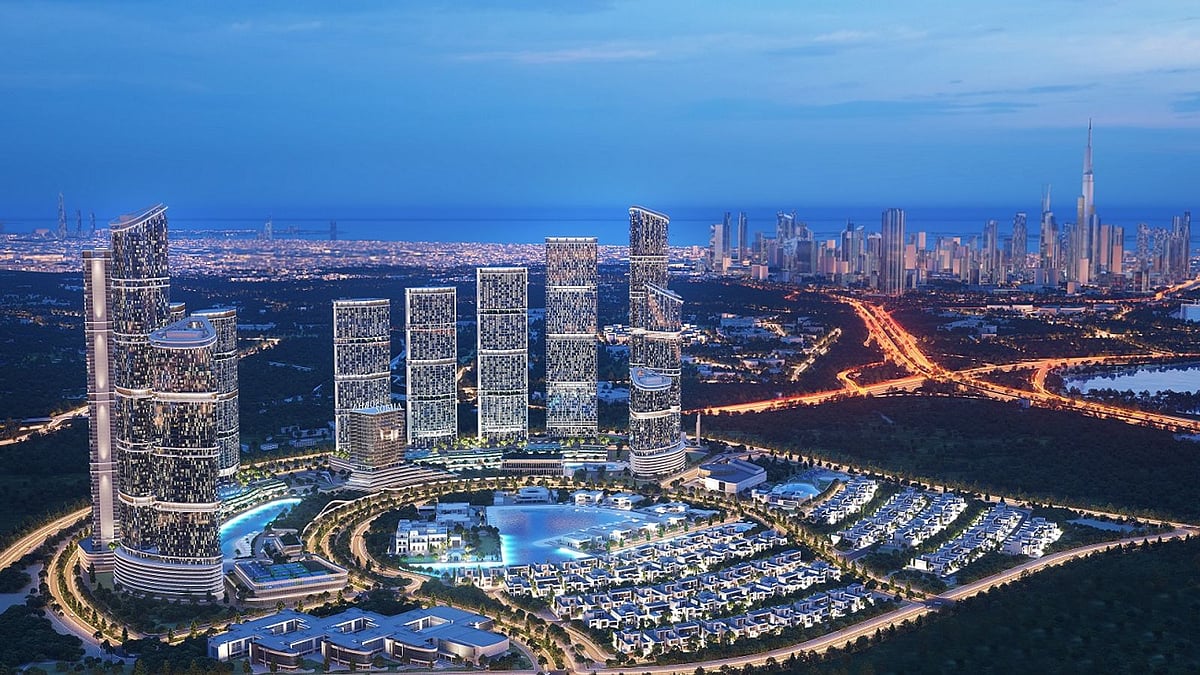
A view of Sobha Hartland, a waterfront community that blends luxury with nature
Over the past decade, luxury real estate market has undergone a profound shift, and this evolution continues today. Previously, buyers were drawn to well-known brands, equating prestige with familiar names. However, today’s high-net-worth individuals prioritise something far more valuable — exceptional quality, meticulous attention to detail, and craftsmanship over flashy branding.
Buyers now seek bespoke designs, artisanal materials, and superior construction, valuing the integrity of the build over mere brand recognition. Developers are taking note, shifting their focus towards authenticity, architectural excellence, and high calibre finishes to meet this growing demand. As more affluent buyers expect their homes to reflect their refined tastes and lifestyle aspirations. This transformation has pushed the industry toward a new benchmark, where quality is the ultimate currency.
Dubai’s real estate landscape has also matured, transitioning from rapid development to a more refined, long-term approach. The days of speculative flipping are being replaced by a focus on end-user needs and sustainable investment value. No longer is luxury mass-produced; instead, developers are crafting thoughtful, well-planned communities that cater to a sophisticated clientele.
One of the most significant shifts in buyer priorities is sustainability. Once an afterthought, sustainable living is now an essential pillar of modern luxury real estate. Buyers demand energy-efficient, smart, and environmentally responsible developments that offer both long-term savings and a reduced ecological footprint. Today’s investors are increasingly aware of the value of green buildings, not just for environmental benefits, but also for their ability to retain value over time and provide a healthier living environment.
At the same time, design excellence is under greater scrutiny than ever before. Buyers now pay close attention to innovative layouts, how natural light meets a space, and biophilic architecture, all of which contribute to timeless, liveable spaces. Properties that seamlessly integrate outdoor and indoor elements are particularly appealing, as they provide not just comfort, but also an enhanced connection to nature. The demand for open-plan living, multifunctional spaces, and wellness-oriented designs is driving a transformation in the luxury housing market, where every detail must be carefully curated to meet evolving buyer expectations.
In an increasingly competitive market, developers who prioritise pillars of sustainability, cutting-edge design, and rigorous quality assurance are securing their place as trusted leaders. This shift is reinforced by the preferences of young buyers, particularly crypto-millionaires, who have a different perception of luxury. For them, exclusivity is defined not just by price or location, but by the level of functionality, craftsmanship, sustainability, and the unique character of a home. Developers who fail to adapt to these expectations risk being left behind as the market continues to evolve.
Ravi Menon, Chairman of Sobha Group
At Sobha Group, we’re not one to stray away, but to recognise this shift, we embrace industry evolution by pioneering full-cycle control, from conceptualization to completion, under one roof. Our backward integration model eliminates reliance on external vendors, allowing us to oversee every detail, and uphold uncompromising standards of craftsmanship. This end-to-end approach not only ensures efficiency and precision and timely delivery but also redefines luxury through durability, timeless design, and flawless execution; a blueprint others now follow.
By internalising the entire development process, we turn visionary concepts into enduring realities, setting a benchmark for quality that transcends industry norms.
A commitment to quality doesn’t just enhance buyer satisfaction, it builds long-term brand credibility and trust. In the real estate industry reputation is everything, and a strong reputation for quality leads to greater demand, higher resale values, and increased investor confidence.
In line with these trends, Dubai is on track to set a global benchmark in premium real estate. Led by the emirate’s ambitious Dubai Economic Agenda (D33) and Dubai Real Estate Sector Strategy 2033, world-class infrastructure and commitment to innovation makes it a frontrunner in the region. With cutting-edge smart city initiatives, sustainability programmes, and architectural marvels, the emirate is redefining premium living.
Beyond aesthetics, Dubai’s appeal is strengthened by its business-friendly environment, tax advantages, and the growing influx of ultra-high-net-worth individuals. These factors reinforce Dubai’s status as a top-tier property investment destination, attracting global investors who recognise the city’s potential for long-term returns.
Dubai’s architectural landscape is already home to some of the world’s most striking buildings, but the next wave of development is focusing on more than just a spectacle. Developers in Dubai have a unique opportunity to blend cultural heritage with futuristic design, creating unparalleled real estate offerings. Communities can no longer be visually impressive to attract investors and homebuyers; they must be highly functional, sustainable, and conducive to a higher quality of life. From waterfront developments to urban wellness districts, the vision for Dubai’s future real estate market is deeply rooted in long-term liveability.
This thriving scene is complemented by ongoing regulatory advancements, which have improved transparency and investor confidence. Initiatives such as long-term visas and foreign ownership incentives further solidify Dubai’s position as a preferred destination for luxury real estate investments. Additionally, the new Real Estate Tokenisation Project is set to transform the real estate investment sector by allowing micro-investors a unique chance to tap into this booming market.
As the market continues to evolve, the new currency of real estate is not branding, but enduring excellence. Developers who prioritise craftsmanship, sustainability, and forward-thinking design will not only meet the expectations of today’s buyers, but will also shape the future of luxury real estate for generations to come.
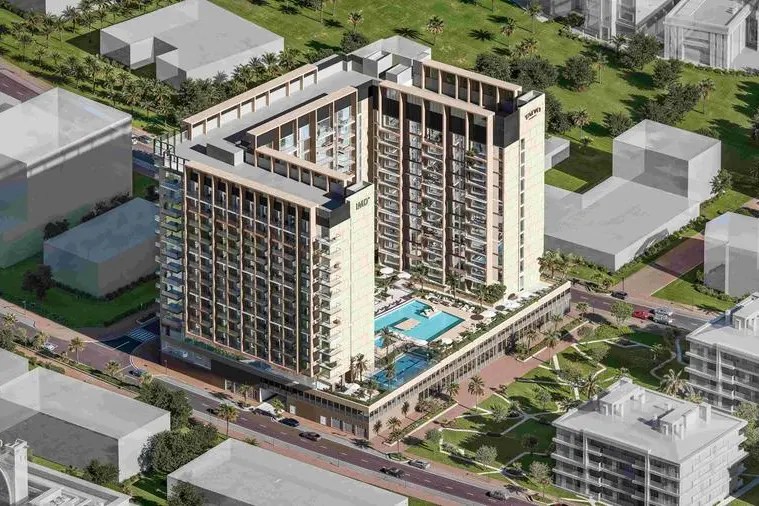
Taiyo Residences features 379 well-designed units, including studios, one-, two- and three-bedroom apartments
LMD, a real estate developer with a diverse portfolio spanning the UAE, Egypt, Spain, and Greece, today (April 17) unveiled Taiyo Residences in Dubai during the International Property Show 2025.
Built around the philosophy of light and space, the AED400 million ($109 million) residential development located at Wasl Gate is slated for handover in Q1 2028.
Taiyo Residences features 379 well-designed units, including studios, one-, two- and three-bedroom apartments. The design impeccably blends both indoor and outdoor spaces, ensuring year-round comfort and convenience for residents, said the developer.
A wide range of amenities is available to support every aspect of modern living, from fitness and wellness to recreation and relaxation.
Residents can enjoy both indoor and outdoor gyms, a lap pool, a beach pool, and a kids’ pool, a kids’ area as well as an outdoor martial arts studio and a paddle court, it stated.
According to LMD, the concept of ‘Designed by Light’ drives the architectural vision of the project, with every detail meticulously crafted to harness the power of natural illumination.
Ascending with quiet confidence, Taiyo Residences’ façade is an impressive display of thoroughly crafted elegance. Its subtle interplay of glass, steel, and earth tones hints at the bespoke world within, earning it the distinction of being a precursor to a curated lifestyle.
Floor-to-ceiling windows reflect the changing hues of the sky, while spacious balconies in the distance extend an invitation to step out and soak in breathtaking panoramic views.
This design approach fosters serene, tranquil living environments where light seamlessly integrates with space, enhancing the overall resident experience, it stated.
On the launch, Managing Partner Hamad Al Abbar said: “Taiyo Residences goes beyond real estate. It’s a lifestyle sculpted by light. We are thrilled to introduce a project that offers premium living spaces while fostering a sense of connection and community.”
“With its thoughtful design and integration of both outdoor and indoor amenities, Taiyo symbolizes our commitment to providing spaces that enhance both well-being and quality of life,” he stated.
For socializing and entertainment, the development offers a BBQ area, gaming lounge, table tennis, billiards, and a PlayStation zone.
In addition, dedicated wellness spaces include co-working areas, a quiet zone, reading lounges, and a coffee bar, all designed to enhance the resident experience, said Al Abbar.
Taiyo Residences offers excellent proximity to key destinations including Ibn Battuta Mall, Palm Jumeirah, Dubai Marina, and Mall of the Emirates, thus providing convenient access to shopping, entertainment, and leisure, he added.